The Ultimate Guide to Commercial Drone Security: Everything You Need to Succeed in 2025
- Anthony Oliveira
- Dec 11, 2025
- 4 min read
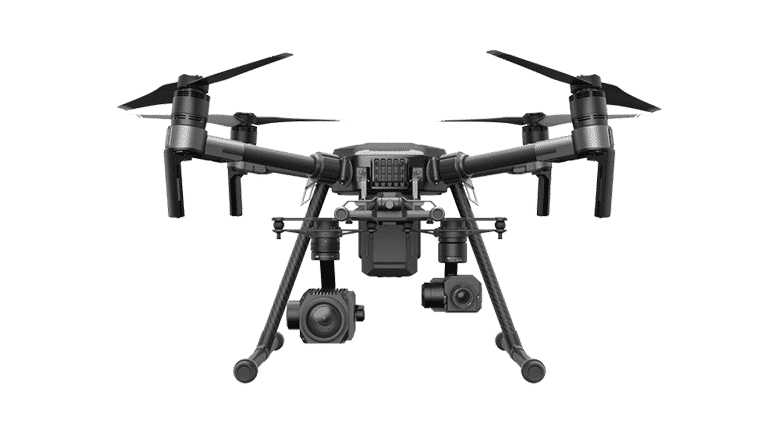
Commercial drone operations are booming, but success in 2025 requires more than just flying skills. Whether you're securing a construction site, monitoring critical infrastructure, or providing surveillance services, understanding drone security is essential for protecting your business and staying compliant.
Let's break down everything you need to know to build a secure, successful commercial drone operation this year.
Getting Your Legal Foundation Right
FAA Part 107: Your Starting Point
Before you can legally fly drones for business, you need FAA Part 107 certification. This isn't just a checkbox: it's your foundation for understanding how commercial drone operations work within the regulatory framework.
The certification process involves passing a knowledge test that covers airspace, weather, flight operations, and safety procedures. But here's the thing: regulations keep evolving, so staying current with updates is just as important as getting certified in the first place.
Remote ID: The New Reality
Remote ID is now mandatory for nearly all commercial operations. Think of it as a digital license plate for your drone. This system broadcasts your drone's location, altitude, and operator information in real-time, allowing authorities to identify and track aircraft.
While some operators see this as intrusive, Remote ID actually provides protection for legitimate businesses. It helps differentiate professional operations from rogue activities and creates accountability in shared airspace.
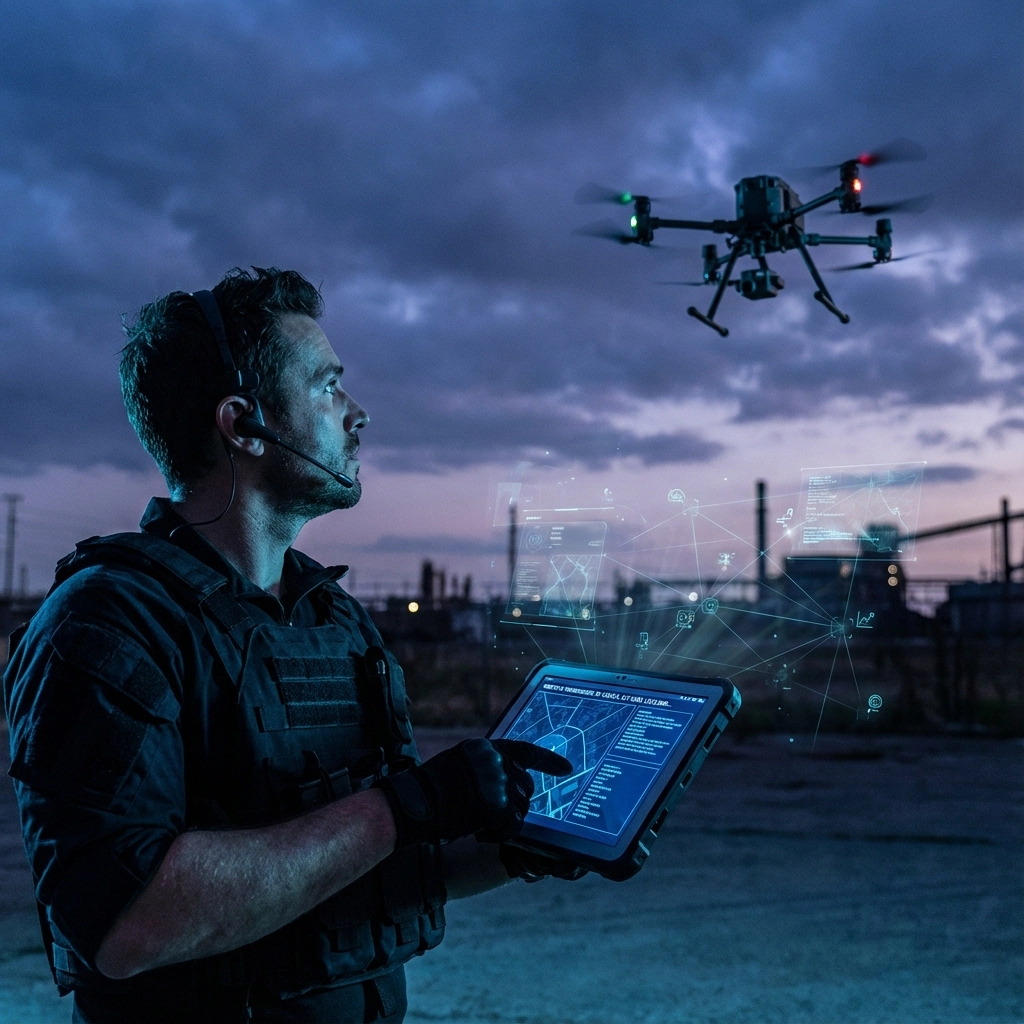
Understanding Operational Limits
Standard Part 107 operations come with specific restrictions:
Visual Line of Sight (VLOS): You must keep your drone visible with the naked eye
400-foot altitude ceiling: Stay below this limit unless near tall structures
No flying over people: Unless you have special waivers or approved equipment
Daylight operations only: Night flying requires additional authorization
For operations that need to go beyond these limits: like Beyond Visual Line of Sight (BVLOS) missions: you'll need special FAA approval and enhanced security measures.
Protecting Your Digital Assets
Treating Drones as Connected Devices
Modern drones are essentially flying computers, which means they're vulnerable to cyber attacks. Your drone data needs the same protection you'd give any sensitive business information.
Essential cybersecurity practices include:
Strong, unique passwords for all drone systems and apps
Regular firmware updates to patch security vulnerabilities
Data encryption for information stored on devices and transmitted to cloud services
Limited cloud sync - only upload what's absolutely necessary
Secure Data Handling Protocols
If you're collecting sensitive information: whether it's security footage, infrastructure data, or proprietary business intelligence: implement these protocols:
Use validated encryption algorithms for data at rest and in transit
Remove sensitive data immediately after each mission
Implement technical controls to prevent unauthorized data transmission
Maintain audit trails for all data access and handling

Managing Supply Chain Risks
The ASDA Framework Impact
The Administration Strategy for Countering Drones Act (ASDA) addresses serious concerns about foreign-manufactured drones in commercial operations. These systems can pose risks including unauthorized data access, hidden surveillance capabilities, and potential loss of flight control.
Key supply chain security measures:
Verify your drones don't contain malware or automatic data transmission to unauthorized parties
Check equipment against prohibited sources lists
Understand that some previously acceptable equipment may now be restricted
Plan for potential fleet transitions if current equipment becomes non-compliant
Vendor Vetting Process
Before purchasing new equipment or services, implement a thorough vetting process:
Research manufacturer backgrounds and ownership structures
Verify compliance with current federal requirements
Assess the security features and update mechanisms of proposed systems
Consider the long-term viability of the platform given evolving regulations
Operational Security Best Practices
Mission Planning and Airspace Coordination
Every commercial flight requires careful planning beyond just the technical aspects:
Verify airspace authorization before every operation
Check for Temporary Flight Restrictions (TFRs) that could affect your mission
Coordinate with air traffic control when operating near airports
Document all approvals and authorizations for compliance verification
Real-Time Security Integration
Modern security operations often require integration with existing infrastructure:
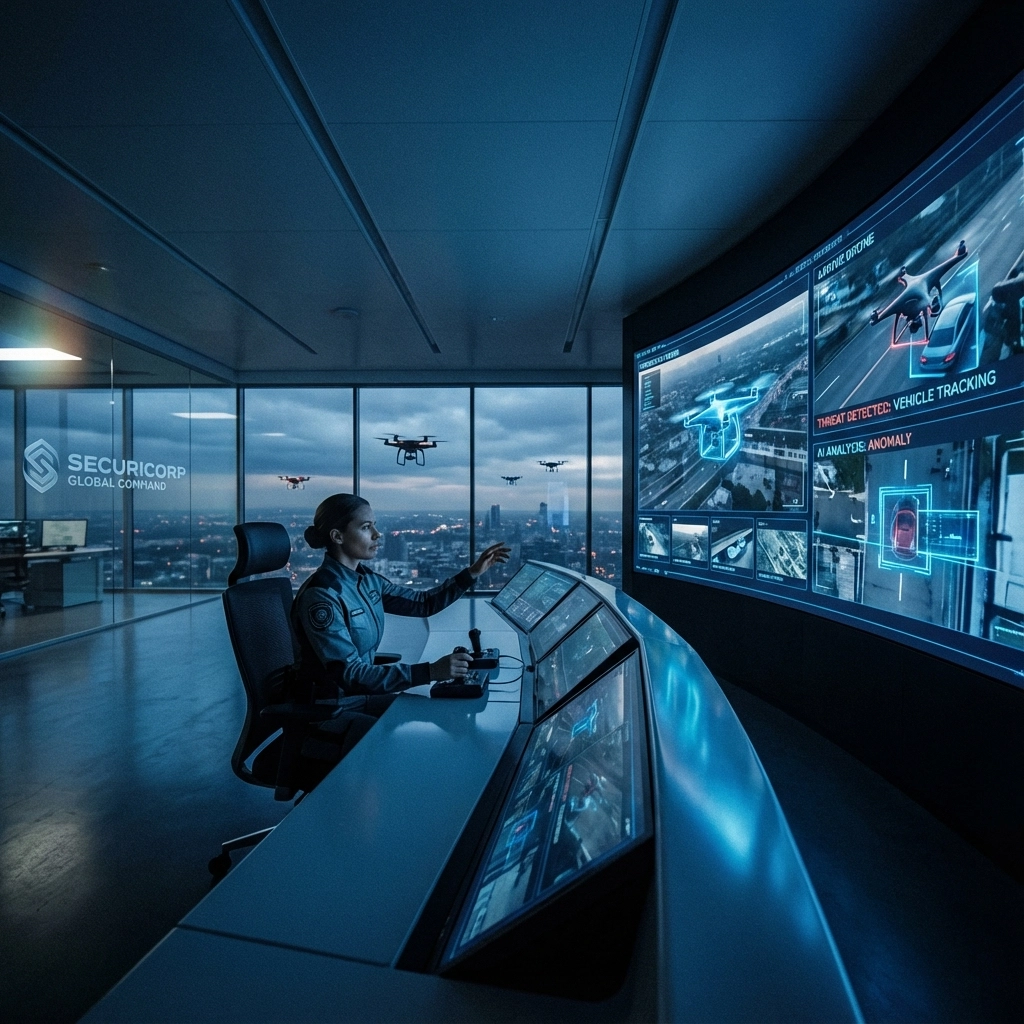
Encrypted live video streaming to command centers
AI-powered threat detection with automated alerts
Integration with alarm systems and security protocols
Secure cloud storage for footage and operational data
Professional security drone services like those offered by SecuDrone handle these complex integrations while maintaining security standards throughout the operation.
Staying Ahead of 2025 Trends
Regulatory Evolution
The regulatory landscape continues shifting. The 2025 National Defense Authorization Act (NDAA) contains new provisions affecting commercial operations, particularly around equipment sourcing and security requirements.
The Transportation Security Administration is also expanding its role in drone regulation, especially for operations near critical infrastructure. This means security requirements will likely become more stringent, not less.
AI and Autonomous Capabilities
Commercial security operations increasingly rely on artificial intelligence for:
Motion tracking and distinguishing between people, vehicles, and animals
Real-time anomaly detection in surveillance footage
Autonomous patrol routes with dynamic threat response
Facial recognition and license plate scanning against security databases
These advanced capabilities require robust cybersecurity measures to prevent unauthorized access to detection algorithms and sensitive databases.
Enhanced Compliance Monitoring
Success in 2025 requires proactive compliance management:
Regular security audits to verify adherence to evolving standards
Incident response protocols for security breaches or operational issues
Continuous monitoring of prohibited sources lists and regulatory updates
Documentation systems that demonstrate ongoing compliance
Building Your Success Framework
To succeed in commercial drone security this year, you need a comprehensive approach that addresses:
Regulatory Compliance: Maintain current certifications, implement Remote ID properly, and stay informed about regulatory changes.
Cybersecurity Resilience: Treat your drones as critical IT assets with appropriate security measures and protocols.
Supply Chain Integrity: Vet all equipment and service providers against current security requirements and prohibited sources lists.
Operational Discipline: Document everything, maintain proper authorizations, and implement consistent security procedures.
Continuous Learning: The industry evolves rapidly, so staying informed about new threats, regulations, and best practices is essential.
Getting Professional Support
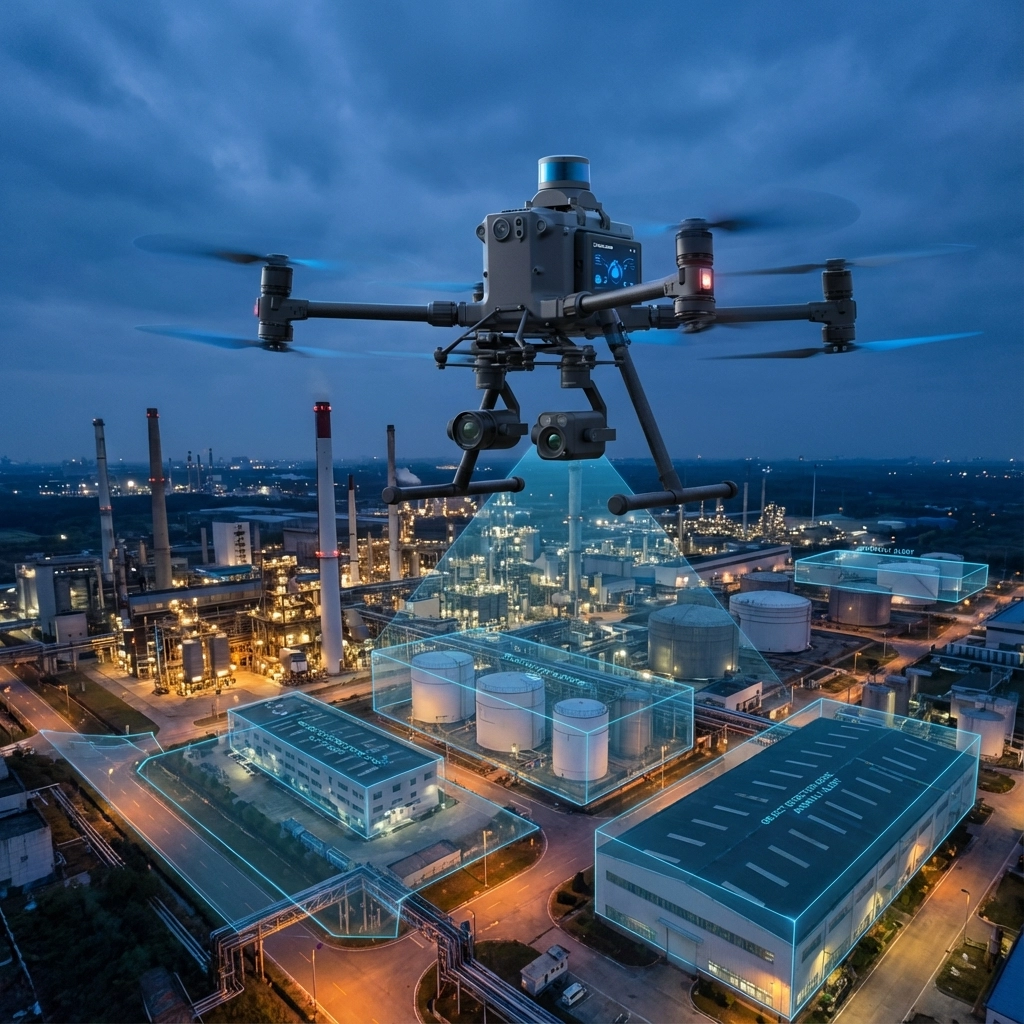
Managing all these requirements while running your core business can be overwhelming. That's where professional drone security consulting becomes valuable. Expert guidance can help you navigate complex regulations, implement proper security measures, and maintain compliance without diverting resources from your primary operations.
Whether you're just starting out or scaling an existing operation, having the right security foundation isn't optional: it's essential for long-term success.
The commercial drone industry offers tremendous opportunities in 2025, but only for operators who take security seriously from day one. By following these guidelines and staying proactive about compliance and security, you'll be positioned to take advantage of these opportunities while protecting your business from the risks that come with this rapidly evolving technology.
Remember: in commercial drone operations, security isn't just about protecting your equipment; it's about protecting your business, your clients, and your future in this exciting industry.

Comments