AI-Powered Drone Surveillance Explained in Under 3 Minutes
- Anthony Oliveira
- Dec 12, 2025
- 5 min read
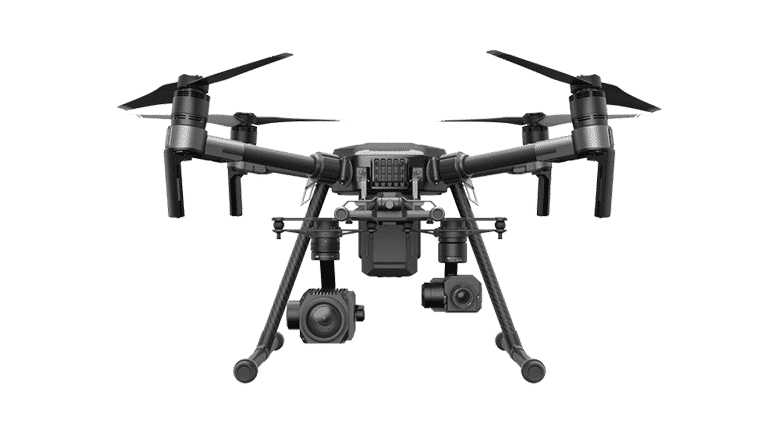
Ever wonder how modern security systems can watch your property 24/7 without human operators getting tired? The answer is AI-powered drone surveillance – and it's changing everything about how we protect businesses, facilities, and critical infrastructure.
Let's break down this game-changing technology in simple terms so you can understand exactly what it is, how it works, and why it might be the security upgrade your business needs.
What Is AI-Powered Drone Surveillance?
Think of AI-powered drone surveillance as having a smart security guard that never sleeps, never gets distracted, and can fly. It combines unmanned drones with artificial intelligence software to create an intelligent monitoring system that works with minimal human oversight.
Unlike traditional security cameras that just record footage for someone to review later, these systems actively analyze what they see in real-time. They can spot threats, identify suspicious behavior, and alert security teams instantly – all while flying autonomously around your property.
The key difference? Intelligence. These aren't just flying cameras; they're smart systems that can make decisions about what they're seeing.
How Does It Actually Work?
The process is surprisingly straightforward, but the technology behind it is sophisticated.
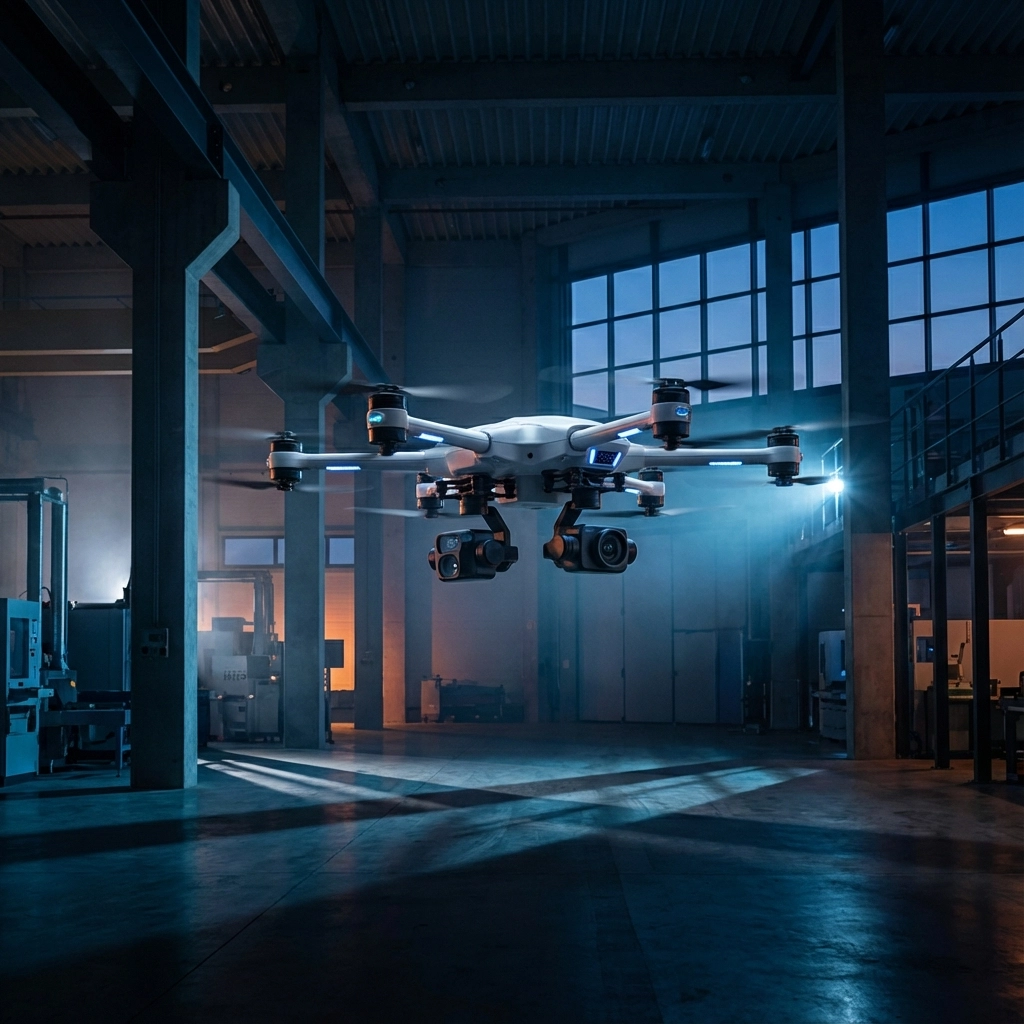
Step 1: Autonomous Flight The drone launches from its docking station and follows pre-programmed routes around your property. Using GPS and obstacle avoidance technology, it navigates without human control, adjusting its path based on weather conditions or detected threats.
Step 2: Data Collection While flying, the drone captures high-definition video, thermal images, and other sensor data. Multiple cameras and sensors work together to create a comprehensive picture of what's happening below.
Step 3: Real-Time Analysis Here's where the AI magic happens. Advanced algorithms analyze the incoming data streams instantly, looking for patterns, anomalies, and potential threats. The system can distinguish between normal activity (like employees arriving for work) and suspicious behavior (like someone climbing a fence after hours).
Step 4: Intelligent Alerts When the AI detects something noteworthy, it immediately sends alerts to security personnel. These aren't generic motion alerts – they're specific notifications like "Unauthorized person detected in Sector 3" or "Vehicle parked in restricted area."
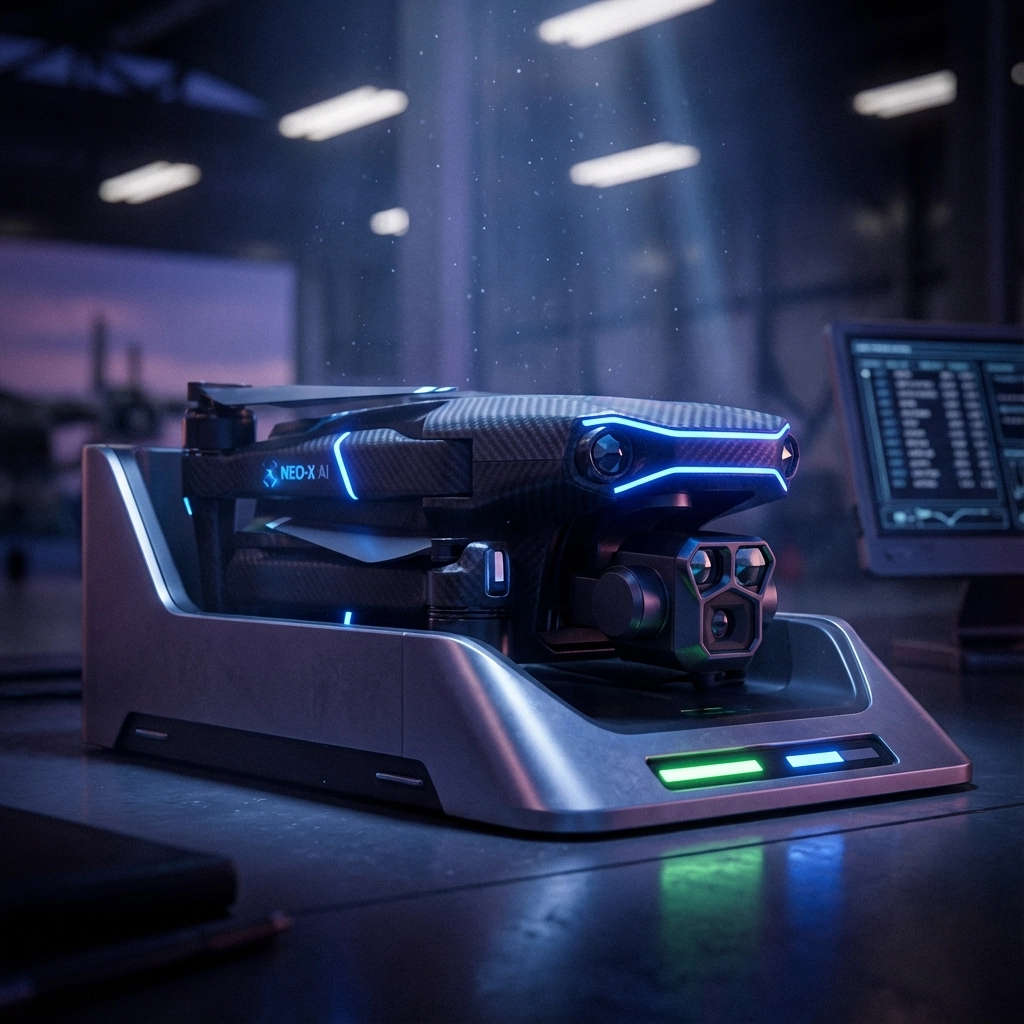
Step 5: Continuous Operation When the battery runs low, the drone automatically returns to its charging dock. If you have multiple drones, another one takes over seamlessly, ensuring continuous coverage.
Key AI Capabilities That Make It Smart
Threat Detection and Classification Modern AI can identify different types of objects and activities with impressive accuracy. It knows the difference between a delivery truck and an unauthorized vehicle, between an employee taking a break and someone casing your facility. This reduces false alarms dramatically – a huge improvement over basic motion sensors.
Facial and License Plate Recognition Advanced systems can identify specific individuals on watchlists or recognize license plates of known vehicles. This capability is particularly valuable for businesses dealing with restraining orders, banned individuals, or stolen vehicle recovery.
Behavioral Analysis The AI doesn't just see what's happening; it understands context. It can detect loitering, aggressive behavior, or unusual movement patterns that might indicate criminal intent. This predictive capability helps prevent incidents before they escalate.
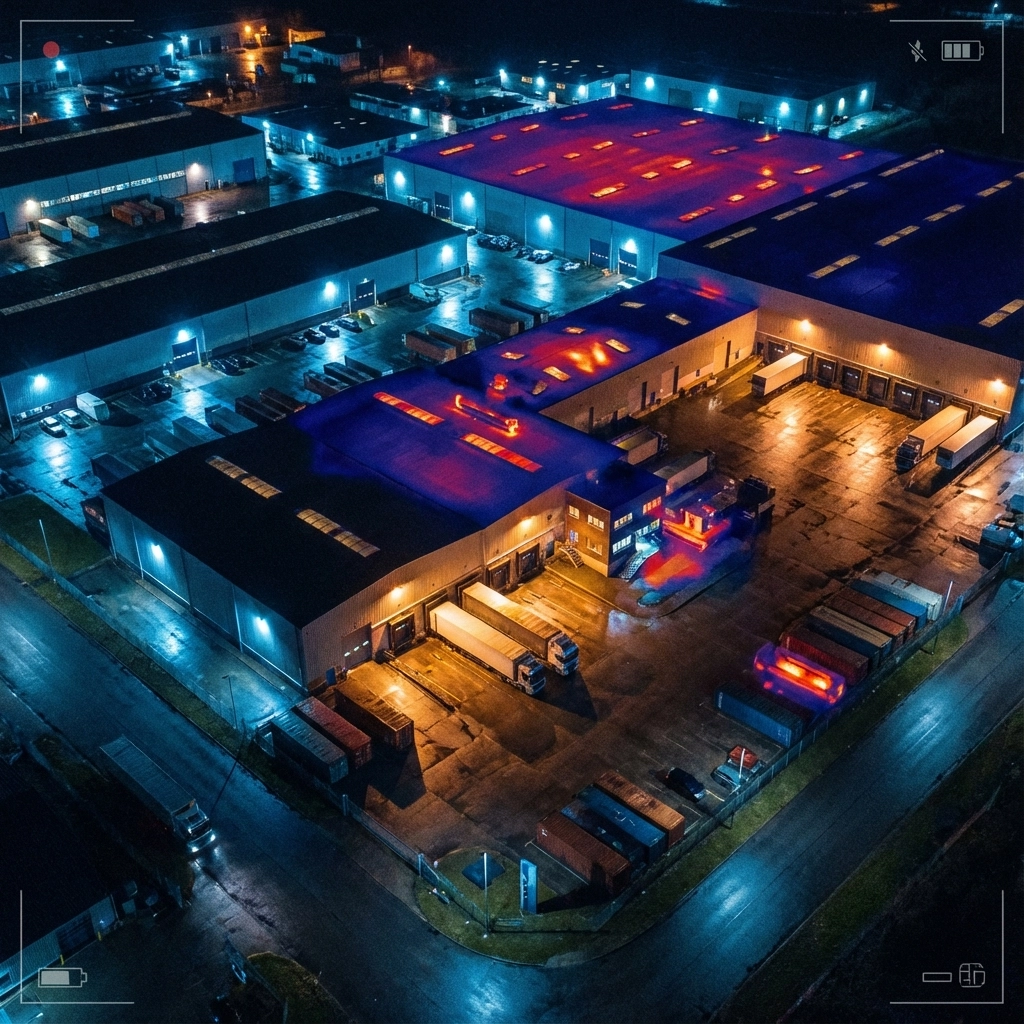
Thermal and Night Vision Many AI-powered drones include thermal cameras that detect heat signatures, making them effective even in complete darkness. The AI can distinguish between human heat signatures and animals, vehicles, or environmental heat sources.
Real-World Applications
Manufacturing and Warehouses Large industrial facilities use AI drones to monitor perimeters, loading docks, and storage areas. The system can detect unauthorized access, monitor employee safety compliance, and even identify potential fire hazards through thermal imaging.
Construction Sites Construction companies deploy these systems to prevent theft of expensive equipment and materials. The drones can patrol sites after hours and during weekends when theft is most common.
Critical Infrastructure Power plants, water treatment facilities, and transportation hubs use AI drone surveillance to protect against both security threats and operational issues. The systems can identify equipment malfunctions, unauthorized access, and potential safety hazards.
Event Security Large outdoor events like festivals or sporting events benefit from aerial surveillance that can monitor crowd behavior, identify potential trouble spots, and coordinate with ground security teams.
Agriculture and Livestock Farmers use AI-powered drones to monitor livestock, detect predators, and identify crop issues. The technology helps protect valuable animals and agricultural investments.
Advantages Over Traditional Security
Cost Effectiveness While the initial investment might seem significant, AI drone surveillance often costs less than hiring multiple security guards for 24/7 coverage. The drones don't require salaries, benefits, or breaks.
Comprehensive Coverage A single drone can cover areas that would require multiple fixed cameras or security guards. The aerial perspective provides views that ground-based systems simply can't match.
Rapid Response Unlike human guards who might take minutes to investigate an alert, drones can be on scene in seconds. This quick response time often means the difference between preventing an incident and dealing with its aftermath.
Consistent Performance Drones don't get tired, distracted, or have bad days. They maintain the same level of vigilance hour after hour, day after day.
Data Collection and Analysis Every patrol generates valuable data that can help improve security protocols, identify patterns, and optimize operations. This intelligence gathering capability provides long-term strategic benefits beyond immediate security.
Common Concerns Addressed
Privacy Considerations Modern AI drone systems can be programmed to blur faces in non-restricted areas or avoid filming certain zones entirely. Many businesses use them primarily for perimeter security rather than internal monitoring.
Weather Limitations While drones can't fly in severe weather, most systems are designed to operate in light rain and moderate winds. Indoor applications, like warehouse monitoring, aren't affected by weather at all.
Maintenance Requirements Today's commercial drone systems are designed for reliability with minimal maintenance. Most require only basic cleaning and periodic software updates.
Getting Started
If you're considering AI-powered drone surveillance for your business, start by identifying your specific security challenges. Are you dealing with perimeter breaches? Equipment theft? Safety compliance monitoring?
The most effective implementations begin with a clear understanding of what you need to protect and what success looks like for your operation. From there, you can evaluate whether the technology aligns with your security goals and budget.
AI-powered drone surveillance isn't science fiction – it's a practical security solution that's already protecting businesses across industries. As the technology continues to improve and costs decrease, it's becoming an increasingly viable option for companies of all sizes.
The question isn't whether AI drone surveillance will become mainstream – it's whether your business will be an early adopter or wait until everyone else catches up.
Ready to explore how this technology could protect your specific operation? Contact SecuDrone to discuss your security challenges and see if AI-powered drone surveillance is right for your business.

Comments